As Functional medicine vs. traditional healthcare takes center stage, this opening passage beckons readers into a world crafted with good knowledge, ensuring a reading experience that is both absorbing and distinctly original.
Exploring the principles, approaches, and patient-centered care of functional medicine alongside the standard practices and limitations of traditional healthcare sets the stage for an insightful comparison.
Functional Medicine
Functional medicine is an approach to healthcare that focuses on addressing the root causes of illness rather than just treating symptoms. It takes into account the individuality of each patient and aims to create personalized treatment plans based on a comprehensive understanding of their health history, genetics, lifestyle, and environment.
Principles and Approach of Functional Medicine
Functional medicine practitioners look at the body as a whole interconnected system, considering how different components like nutrition, stress, sleep, and exercise impact overall health. They use a combination of conventional medicine, lifestyle modifications, dietary changes, supplements, and alternative therapies to restore balance and promote healing.
Conditions Treated with Functional Medicine
Functional medicine is commonly used to treat chronic conditions such as autoimmune disorders, digestive issues, hormonal imbalances, metabolic syndrome, and mental health disorders. By addressing the underlying causes of these conditions, functional medicine aims to improve overall health and well-being in the long term.
Personalized Approach of Functional Medicine vs. Traditional Healthcare
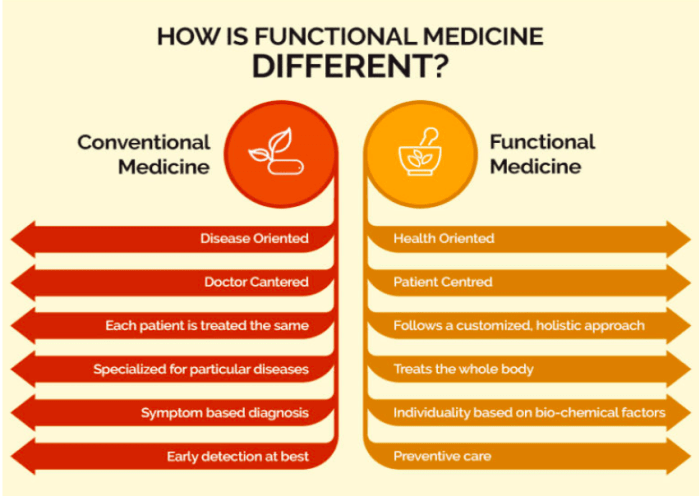
In contrast to traditional healthcare, which often follows a one-size-fits-all approach, functional medicine focuses on personalized care. This means that treatment plans are tailored to the individual needs of each patient, taking into consideration their unique biochemistry, genetics, and lifestyle factors.
By addressing the specific imbalances and deficiencies that contribute to illness, functional medicine aims to promote optimal health and prevent future disease.
Traditional Healthcare
Traditional healthcare refers to the conventional medical system that focuses on treating symptoms and diseases using standard practices and procedures. This approach typically involves the use of pharmaceutical drugs, surgeries, and other interventions to address health issues.
Standard Treatment Methods
- Prescription Medications: Traditional healthcare often relies on prescribing medications to manage symptoms or target specific conditions.
- Surgeries: In cases where medication alone is not effective, surgical procedures may be recommended to treat the underlying problem.
- Physical Therapy: For rehabilitation and recovery from injuries or surgeries, traditional healthcare may include physical therapy sessions.
- Diagnostic Tests: Standard practices in traditional healthcare involve using diagnostic tests such as blood tests, imaging scans, and biopsies to identify health issues.
Limitations in Addressing Chronic Conditions
Traditional healthcare has certain limitations when it comes to addressing chronic conditions, such as:
- Focus on Symptoms: Traditional healthcare often focuses on managing symptoms rather than addressing the root cause of chronic conditions, which may lead to temporary relief but not long-term solutions.
- Overreliance on Medications: The standard approach in traditional healthcare involves prescribing medications, which may result in dependency and potential side effects without addressing the underlying issues.
- Limited Holistic Approach: Traditional healthcare may lack a holistic approach, neglecting factors such as nutrition, lifestyle, and emotional well-being that play a crucial role in managing chronic conditions.
Patient-Centered Care
Functional medicine places a strong emphasis on patient-centered care, focusing on treating the whole person rather than just addressing symptoms. This approach involves actively involving patients in their own healthcare decisions and empowering them to take charge of their well-being.
Involving Patients in Their Healthcare Decisions
- Functional medicine practitioners take the time to listen to patients' concerns, gather detailed medical histories, and consider lifestyle factors that may be contributing to their health issues.
- Patients are encouraged to actively participate in creating personalized treatment plans that align with their goals and preferences.
- Shared decision-making is a key principle in functional medicine, where patients are educated about various treatment options and are empowered to choose the approach that resonates with them.
Patient-Doctor Relationship in Functional Medicine vs. Traditional Healthcare
- In functional medicine, the patient-doctor relationship is characterized by collaboration, mutual respect, and open communication. Patients are seen as partners in their healthcare journey.
- Functional medicine practitioners often spend more time with patients during appointments, allowing for deeper discussions and a better understanding of the patient's needs and goals.
- On the other hand, traditional healthcare may sometimes follow a more paternalistic approach, where doctors make decisions without necessarily involving patients in the process.
- The patient-doctor relationship in traditional healthcare may be more transactional, with less emphasis on building long-term relationships and understanding the patient's individual needs.
Holistic Approach

Functional medicine takes a holistic approach towards health and wellness, considering the interconnectedness of various body systems. This approach focuses on treating the root cause of health issues rather than just addressing symptoms. By looking at the body as a whole and understanding how different systems are interconnected, functional medicine aims to promote overall well-being and optimal health.
Interconnectedness of Body Systems
Functional medicine recognizes that the body is a complex and interconnected system where each part affects the others. For example, a hormonal imbalance can impact gut health, which in turn can affect immune function. By addressing the underlying imbalances and connections between different systems, functional medicine practitioners can develop personalized treatment plans that target the root cause of health issues.
Contrast with Traditional Healthcare
In contrast, traditional healthcare often focuses on treating symptoms with medications or procedures without always considering the underlying causes. This symptom-focused approach may provide temporary relief but may not lead to long-term health improvements. Functional medicine, on the other hand, aims to uncover the root causes of health issues and address them through lifestyle changes, nutrition, supplements, and other holistic interventions.
Root Cause Analysis
Root cause analysis is a fundamental aspect of functional medicine that focuses on identifying and addressing the underlying causes of health issues rather than just treating symptoms. By delving deep into a patient's medical history, lifestyle, genetics, and environmental factors, functional medicine practitioners aim to uncover the root cause of the problem and develop personalized treatment plans to promote long-term health and wellness.
Significance of Root Cause Analysis in Functional Medicine
- Functional medicine looks beyond the surface-level symptoms to understand the interconnectedness of the body systems and how imbalances in one area can lead to health issues in another.
- By addressing the root cause of the problem, functional medicine seeks to not only alleviate symptoms but also prevent future health issues from arising.
- Through thorough investigation and personalized care plans, functional medicine empowers patients to take an active role in their health and well-being.
Comparison with Traditional Healthcare
- Traditional healthcare often focuses on symptom management through medications or procedures without addressing the underlying cause of the health issue.
- While traditional healthcare can provide quick relief for symptoms, it may not lead to long-term health improvements or prevent future complications.
- Functional medicine's emphasis on root cause analysis sets it apart from traditional healthcare by promoting a holistic approach to health and wellness.
Closing Summary
In conclusion, the debate between Functional medicine and traditional healthcare reveals a complex landscape where personalized care and root cause analysis take precedence over conventional treatment methods. Understanding these differences is crucial for individuals seeking optimal health outcomes.
FAQ Summary
How does functional medicine differ from traditional healthcare?
Functional medicine focuses on identifying and addressing the root causes of health issues, while traditional healthcare often focuses on managing symptoms.
What conditions are commonly treated using functional medicine?
Functional medicine is often used to treat conditions such as autoimmune disorders, hormonal imbalances, and gastrointestinal issues.
How does patient-centered care play a role in functional medicine?
Functional medicine involves patients in their healthcare decisions and prioritizes personalized treatment plans based on individual needs.
Can traditional healthcare address chronic conditions effectively?
Traditional healthcare may have limitations in addressing chronic conditions due to its more symptom-focused approach.